

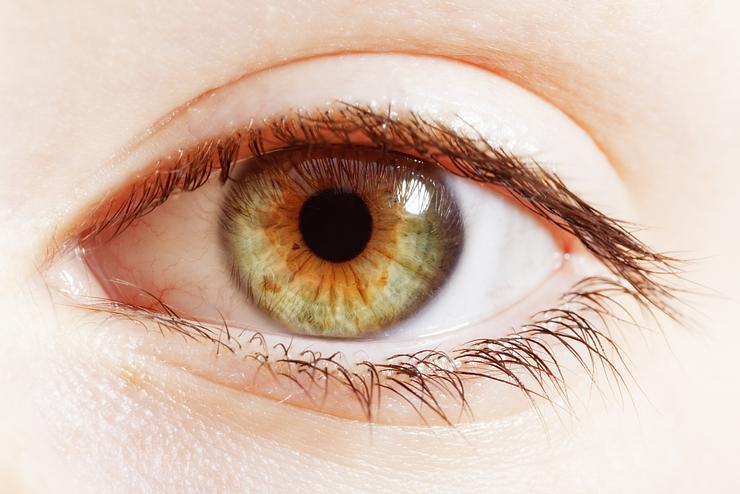
Hazel eyes are a captivating blend of brown, green, and gold pigments that create a multi-dimensional appearance unlike any other eye colour. This unique combination occurs in approximately 5% of the global population, making hazel eyes rarer than brown or blue eyes.
What Defines Hazel Eyes: Understanding the Unique Colour Combination
Hazel eyes stand apart from other eye colours through their distinctive blend of brown, green, and gold pigments that create a truly multi-tonal appearance. Some hazel eyes also display blue or amber flecks, setting them apart from solid-coloured eyes like pure brown, green, or blue.
- Brown-dominant hazel: Brown serves as the primary colour with green undertones
- Green-dominant hazel: Green takes prominence with brown accents
Unlike other eye colours that appear uniform across the iris, hazel eyes typically showcase a gradient pattern with different hues concentrated in specific areas. The characteristic appearance features darker colours near the pupil that gradually transition to lighter shades toward the outer iris.
The Complex Genetics Behind Hazel Eye Color
Eye colour inheritance involves up to 16 different genes working together, making hazel eyes impossible to predict using simple dominant-recessive patterns like those taught in basic biology classes. This genetic complexity explains why two brown-eyed parents can have a hazel-eyed child — a phenomenon that often surprises families expecting predictable inheritance patterns.
The OCA2 and HERC2 genes play major roles in melanin production, but hazel eyes result from a specific combination of genetic instructions that create moderate melanin levels. This differs from high melanin concentration in brown eyes and low melanin levels in blue eyes.
The Role of Melanin Distribution and Rayleigh Scattering
Hazel eyes contain a moderate amount of melanin that is unevenly distributed across the iris, with higher concentrations often found in the outer portions. This uneven distribution creates the characteristic colour variations and patterns that define hazel eyes.
The unique colour-shifting quality of hazel eyes occurs when this uneven melanin distribution combines with Rayleigh scattering — the same phenomenon that makes the sky appear blue. Light bounces off the iris structure differently depending on the viewing angle, creating an ever-changing kaleidoscope of colours that makes hazel eyes so distinctive.
Global Rarity and Geographic Distribution of Hazel Eyes
Hazel eyes occur in only about 5% of the world's population, making them rarer than brown eyes (79% of people) and blue eyes (8-10% of people), but more common than green eyes (2% of people). Geographic distribution reveals distinct patterns: hazel eyes are most prevalent in regions where European, Mediterranean, Middle Eastern, and North African populations have historically mixed.
| Eye colour | Share of world population |
|---|---|
| Brown | About 79% |
| Blue | 8–10% |
| Hazel | About 5% |
| Green | About 2% |
- North America and Europe: Approximately 18% of people with European ancestry have hazel eyes
- East Asian populations: Extremely rare occurrence
- Sub-Saharan African populations: Almost exclusively brown eyes due to higher melanin levels
- Indigenous American populations: Predominantly brown eyes
The Science of Color Perception in Hazel Eyes
The apparent colour change in hazel eyes is an optical illusion caused by how different lighting conditions interact with the iris structure. Bright sunlight emphasizes golden tones, while indoor fluorescent lighting may bring out green hues, and dim lighting often makes them appear more brown.
Clothing colours and makeup can create contrast effects that make certain tones in hazel eyes more prominent — which explains why people often report their hazel eyes looking different depending on what they wear.
The Sunburst Effect Explained
The sunburst or starburst pattern common in hazel eyes results from melanin concentration differences between the inner and outer iris, creating radiating lines of colour that extend from the pupil like sun rays. This effect is enhanced by the iris's physical structure.
- Tiny muscles that control pupil dilation
- Collagen fibers that create depth and texture
- Multiple layers that allow light to reflect and refract at different angles
Cultural Significance and Historical Perspectives
Throughout history, hazel eyes have been associated with mysticism and spiritual abilities. European folklore often called them "witch's eyes," believing they granted the ability to see into both physical and spiritual realms.
In contemporary culture, hazel eyes are often associated with creativity, empathy, and adaptability. Popular culture has enhanced the mystique of hazel eyes through celebrity figures like Angelina Jolie and fictional characters in literature.
When a Change in Eye Colour Means It's Time for an Eye Exam
Hazel eyes are stable by adulthood — so a genuine change in iris colour is worth taking seriously, not just noticing. New brown spots or freckles on the iris are usually harmless (iris nevi), but your optometrist should document and monitor them, since rare cases can develop into ocular melanoma. One eye becoming noticeably lighter or a different colour than the other (acquired heterochromia) can signal inflammation inside the eye or, occasionally, a nerve condition, and warrants a prompt exam.
Watch for these changes in particular:
- Sudden darkening or lightening of the iris in one or both eyes
- New spots, patches, or freckles on the iris
- A growing difference in colour between your two eyes
- Loss of the characteristic multi-tonal hazel pattern
And because hazel eyes carry only moderate melanin, they have less built-in UV defence than brown eyes — making UV-blocking sunglasses a year-round habit, not just a summer one.
Did You Know? The melanin in hazel eyes provides natural protection equivalent to wearing sunglasses with a light tint — though actual UV-blocking eyewear is still essential!
If you've noticed any change in your eye colour or pattern, a comprehensive eye exam is the fastest way to rule out anything serious — and most changes turn out to be nothing at all.
For those interested in temporarily changing their eye appearance, coloured contact lenses offer a safe alternative to permanent surgical procedures. Proper fitting by an optometrist is essential to prevent complications like corneal infections or oxygen deprivation.
Where Do Hazel Eyes Come From? Origins and Ancient DNA
Hazel eyes trace back to the same handful of genes that govern all human eye colour — chiefly OCA2 and HERC2 on chromosome 15, which regulate how much melanin the iris produces. The genetic variants behind lighter eye colours are ancient: researchers estimate they arose in human populations thousands of years ago, and ancient DNA studies of early Europeans have found individuals carrying light- and mixed-eye-colour variants long before recorded history. When scientists reconstruct the appearance of people from ancient genomes, eye colour is one of the traits they can predict — which is why hazel and other mixed eye colours keep appearing in facial reconstructions of people who lived millennia ago.
Because hazel eyes require an intermediate amount of melanin — more than blue eyes, less than brown — they appear most often where populations carrying different melanin variants have historically mixed. That's why hazel eyes are concentrated in regions shaped by European, Mediterranean, Middle Eastern, and North African ancestry, and why they can surface in a family after generations of brown or green eyes: the combination of variants needed for that in-between melanin level can come together in any child whose parents each carry part of the recipe.
FAQ
What makes hazel eyes different from other eye colors?
How rare are hazel eyes worldwide?
Why do hazel eyes seem to change color in different lighting?
What causes the sunburst pattern often seen in hazel eyes?
Can two brown-eyed parents have a child with hazel eyes?
Are people with hazel eyes at greater risk for sun damage?
Where are hazel eyes most commonly found?
Do changes in hazel eye color during adulthood indicate health problems?