

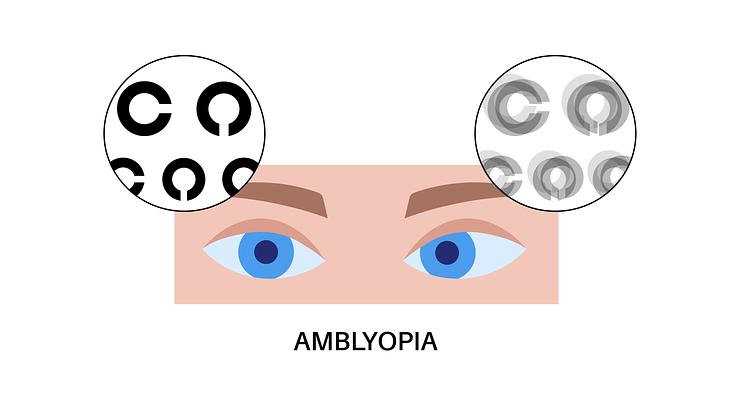
Amblyopia is a vision development disorder where one eye fails to achieve normal visual acuity, occurring when the brain favors one eye over the other during critical childhood development years. This condition affects approximately 5% of children under 15, making it the most common cause of vision loss in young people.
Unlike simple refractive errors that glasses can correct, amblyopia involves the brain actively suppressing signals from the weaker eye, potentially leading to permanent vision impairment if left untreated before age 7-8. Early detection and treatment make all the difference in helping children achieve their full visual potential.
What Is Amblyopia (Lazy Eye)?
Amblyopia is a vision development disorder where one eye fails to achieve normal visual acuity despite having no structural abnormalities, occurring when the brain favors one eye over the other during critical childhood development years (typically before age 7-8).
The condition affects approximately 5% of children under 15, making it the most common cause of vision loss in young people, and contrary to its nickname "lazy eye," it's not caused by laziness but by disrupted neural pathways between the eye and brain.
Unlike simple refractive errors that glasses can fix, amblyopia involves the brain actively suppressing or ignoring signals from the weaker eye, leading to permanent vision impairment if left untreated during the critical developmental window.
Recognizing Symptoms of Amblyopia
Children may frequently bump into objects on one side, favor turning their head to use their stronger eye, or demonstrate poor depth perception when catching balls or pouring liquids, as their brain relies primarily on monocular (single-eye) vision cues.
Observable behaviors include persistent squinting, shutting one eye especially in bright light, or tilting the head at unusual angles to compensate for the vision imbalance between eyes.
Many children with amblyopia show no obvious symptoms at home because the stronger eye compensates effectively, allowing them to function normally in daily activities while the condition silently worsens.
Academic struggles like difficulty copying from the board, poor reading fluency, or problems with hand-eye coordination in sports may be the only indicators, often misattributed to learning difficulties rather than vision problems.
Understanding the Three Main Causes of Amblyopia
Strabismus (Eye Misalignment): Strabismus, where eyes point in different directions, is the most common cause of amblyopia, occurring when eye muscles don't work together properly — the brain receives two conflicting images and suppresses the input from the misaligned eye to avoid double vision.
This misalignment can be constant or intermittent, with the brain gradually learning to ignore the turned eye completely, leading to strabismic amblyopia even after the eye alignment is surgically corrected.
Refractive Amblyopia (Focus Differences): Significant differences in prescription between eyes (anisometropia) cause refractive amblyopia when one eye is much more nearsighted, farsighted, or has more astigmatism than the other, resulting in the brain preferring the clearer image from the better-focusing eye.
This type is particularly challenging to detect because both eyes appear straight and aligned, with no visible signs that one eye isn't developing proper vision until formal vision testing reveals the disparity.
Deprivation Amblyopia (Physical Blockages): Physical obstructions like congenital cataracts (cloudy lens from birth), ptosis (droopy eyelid covering the pupil), or other structural abnormalities prevent clear images from reaching the retina during critical development periods.
This is the most severe form requiring urgent treatment because any blockage during the first few months of life can cause irreversible vision loss, as the visual cortex needs clear input to develop proper neural connections.
How Eye Care Professionals Diagnose Amblyopia
Detecting amblyopia requires specialized testing that goes beyond standard vision screenings. Eye doctors use comprehensive examination techniques to identify subtle differences between each eye's visual performance.
Age-appropriate vision charts help measure visual acuity separately for each eye, while cover-uncover tests reveal whether eyes work together properly or if one drifts when the other is covered.
Early detection protocols recommend:
- First eye exam at 6 months
- Follow-up examination at 3 years
- Pre-school assessment before age 5
Children with risk factors need extra vigilance — particularly those born prematurely (under 30 weeks), with low birth weight (under 3.3 pounds), or with family history of amblyopia or strabismus.
Modern diagnostic equipment enhances detection accuracy. Autorefractors measure each eye's focusing ability objectively, eliminating guesswork in young children who can't communicate clearly.
Advanced tools like optical coherence tomography (OCT) create detailed cross-sections of retinal layers, while visual evoked potential (VEP) testing measures how the brain responds to visual stimuli.
Did You Know? Many children with amblyopia pass basic school vision screenings because the stronger eye compensates during testing — comprehensive eye exams test each eye individually to catch these hidden vision problems.
Treatment Options for Children and Adults
Standard Treatments for Children: Eye patching remains the gold standard for pediatric amblyopia treatment. Children wear an adhesive patch over their stronger eye for 2-6 hours daily, forcing the brain to strengthen connections with the weaker eye.
For children who resist patches, atropine eye drops offer an alternative. These drops temporarily blur vision in the stronger eye, creating similar therapeutic effects.
Corrective eyeglasses address underlying refractive errors and may be combined with:
- Bangerter filters (translucent filters applied to the stronger eye's lens)
- Part-time occlusion therapy
- Vision exercises tailored to the child's specific needs
Emerging Treatments for Adults: Vision therapy programs now challenge traditional beliefs about adult amblyopia treatment. Through specialized computer games and virtual reality systems, adults engage in intensive perceptual learning exercises that may retrain their visual system.
Dichoptic training presents different images to each eye simultaneously, encouraging binocular cooperation. Some adults achieve stereoscopic (3D) vision for the first time after 40-80 hours of consistent therapy over several months.
Long-Term Impact and Living with Amblyopia
Untreated amblyopia significantly impairs depth perception, making everyday activities more challenging. Driving becomes particularly difficult when judging distances between vehicles or parking.
Sports requiring precise hand-eye coordination — tennis, baseball, basketball — may prove frustrating or even dangerous without proper depth cues.
Career restrictions often affect those with amblyopia:
- Commercial aviation
- Military service positions
- Law enforcement roles
- Precision manufacturing jobs
- Surgery and certain medical specialties
Many successful professionals manage amblyopia through workplace accommodations. The condition may qualify as a visual disability when it substantially limits major life activities, potentially making individuals eligible for accommodations or benefits depending on severity and local regulations.
Protecting Vision Throughout Life
People with amblyopia face higher risks of bilateral blindness if their good eye becomes injured or develops age-related conditions like age-related macular degeneration.
Essential protective strategies include:
- Annual comprehensive eye exams monitoring both eyes
- Protective sports goggles during physical activities
- Immediate medical attention for any vision changes in the stronger eye
Early intervention before age 7 provides optimal outcomes, with success rates dropping significantly after age 10. However, newer research shows adult brains retain more plasticity than previously believed, offering hope for treatment at any age.
FAQ
What is amblyopia and how is it different from regular vision problems?
What are common signs and symptoms of amblyopia in children?
What causes amblyopia to develop in children?
At what age is amblyopia most likely to develop and why is early treatment important?
How do eye doctors diagnose amblyopia in children?
What are the standard treatments for amblyopia in children?
Can adults with amblyopia improve their vision with treatment?
What long-term effects can amblyopia have if left untreated?