

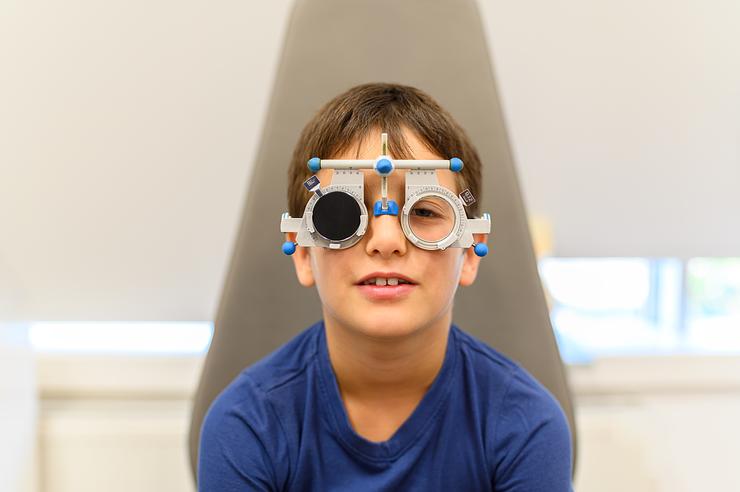
Myopia control (also called myopia management) uses evidence-based treatments to slow how fast a child's nearsightedness worsens. It slows progression, but it cannot cure or reverse myopia. The main options for kids and teens include myopia-control eyeglasses, soft myopia-control contact lenses such as MiSight, orthokeratology (ortho-k), and low-dose atropine eye drops. In Calgary, an optometrist assesses your child and recommends the best fit, and cost varies by clinic. FYidoctors offers doctor-led myopia care at Calgary locations.
What to Remember
- Myopia control uses evidence-based treatments to slow the progression of a child's nearsightedness — it does not cure or reverse it.
- The main options are myopia-control glasses, soft myopia-control contacts, orthokeratology, and low-dose atropine drops.
- Slowing myopia lowers a child's lifetime risk of serious eye conditions such as retinal detachment and glaucoma.
- Treatment works best when started early, so an eye exam at the first signs of nearsightedness matters.
- Cost varies by clinic and isn't covered by Alberta's provincial plan, so it's worth checking your private insurance.
What Is Myopia Control?
Myopia, or nearsightedness, develops when the eyeball grows a little too long from front to back. That extra length causes light to focus in front of the retina, so distant objects look blurry.
Myopia control is a set of evidence-based treatments and habits that slow how quickly that eye growth — and your child's prescription — worsens. Be clear on what this means: it manages progression, but it can't cure or reverse the nearsightedness your child already has.
That's the key difference from standard single-vision glasses, which sharpen today's vision but do nothing to slow the underlying growth. Myopia control aims to do both.
Why Myopia Control Matters for Your Child
Myopia is becoming far more common. Globally, prevalence rose from about 22% in 2000 and is projected to reach 50% by 2050. Closer to home, a Canadian pilot study found roughly 29% of schoolchildren aged 11 to 13 were myopic.
Why does slowing it matter so much? The higher a child's myopia climbs, the greater their lifetime risk of serious eye conditions. Compared with people who aren't myopic, those with high myopia face up to roughly 39 times the risk of retinal detachment, and glaucoma risk rises about 20% for each additional diopter.
Slowing progression by even one diopter meaningfully reduces future risk — protecting your child's long-term vision, not just how clearly they see today.
Myopia Control Options for Kids and Teens
No single option is best for every child. The right choice depends on age, prescription, lifestyle, and how well your child tolerates glasses, contacts, or drops.
Myopia-Control Eyeglasses
These look like ordinary glasses but use special lenses that correct vision while gently slowing eye growth. Two well-studied examples are HOYA MiYOSMART and Essilor Stellest, both available in Canada.
In a two-year trial, MiYOSMART slowed progression by about 59–60% versus single-vision lenses. Over two years, Essilor Stellest slowed progression by about 55% versus single-vision lenses. For many kids, glasses are a comfortable first step.
Soft Myopia-Control Contact Lenses
Daily disposable dual-focus lenses are another strong option. MiSight 1 day is the best-known example: over three years, it slowed myopia progression by 59% and axial eye growth by 52% compared with single-vision daily lenses, in a trial of children aged 8 to 12 at the start. MiSight is FDA-approved in the US for myopia control and is available in Canada.
Learn more about contact lenses.
Orthokeratology (Ortho-K)
Ortho-k uses rigid lenses worn overnight that gently reshape the cornea while your child sleeps. In the morning, they take the lenses out and see clearly all day without glasses or daytime contacts. Meta-analyses show ortho-k significantly reduces axial elongation compared with single-vision lenses. That daytime freedom makes it popular with active kids and teens.
Low-Dose Atropine Eye Drops
Atropine is a nightly low-dose eye drop, often combined with glasses or contacts. In the LAMP study30285-9/abstract), the 0.05% concentration proved most effective at slowing progression. Keep in mind that progression can rebound if the drops stop, so ongoing, doctor-led management matters.
Newer and Combined Approaches
Emerging options such as repeated low-level red-light (RLRL) therapy are still being studied, with most evidence coming from trials in China; it isn't a standard treatment in Canada. Optometrists sometimes combine approaches, tailoring the plan to your child.
FAQ
What is myopia control, and how can it help manage my child's nearsightedness?
What are the best myopia management options in Canada?
Can contact lenses slow myopia progression in children?
At what age should my child start myopia control?
How much does myopia control cost in Calgary?
Can myopia be reversed?