

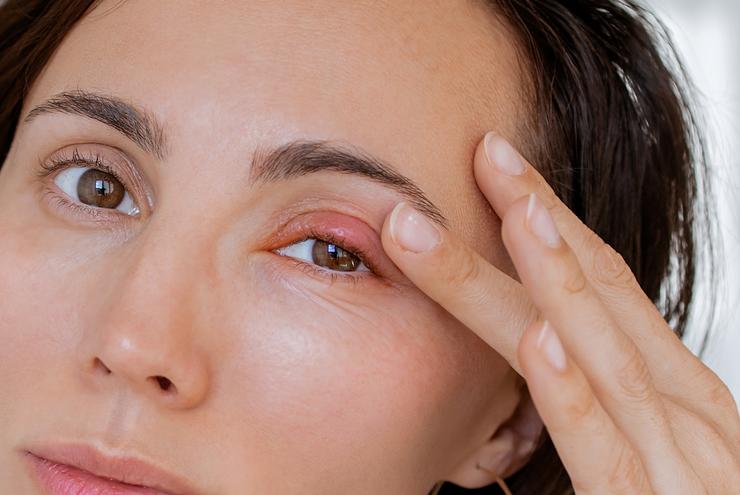
A stye (medically called a hordeolum) is a painful red bump on the edge of the eyelid that forms when bacteria infect a small oil gland or an eyelash follicle. Most styes are harmless and clear on their own within one to two weeks. The main treatment is a warm compress held gently on the closed eye several times a day, and you should never squeeze or pop it. See an eye doctor if the stye affects your vision, worsens after a few days, or keeps coming back.
What to Remember
- A stye is a common, usually harmless bacterial infection of an oil gland in the eyelid.
- Most styes clear up on their own within one to two weeks with regular warm compresses.
- Never squeeze or pop a stye, because that can spread the infection.
- Styes aren't really contagious, but bacteria can spread, so keep your hands and pillowcases clean.
- Talk to your optometrist if a stye affects your vision, worsens, or keeps returning.
What Is a Stye?
A stye is a small, pimple-like bump right at the edge of your eyelid, sore to the touch and a little swollen. Doctors call it a hordeolum. It's very common, usually shows up on just one eyelid, and typically resolves without special treatment.
Styes come in two forms. An external stye develops in the tiny glands at the base of an eyelash, so it points outward at the lash line. An internal stye forms in a deeper oil gland inside the lid, which tends to make it more painful.
What Causes a Stye?
A stye forms when one of the eyelid's small oil glands or an eyelash follicle becomes blocked and infected. The usual culprit is Staphylococcus aureus, a type of bacteria that already lives harmlessly on your skin. Rubbing or touching your eyes with unwashed hands gives those bacteria an easy way in.
Some people are simply more prone to styes than others. Your risk goes up if you've had a stye before, wear contact lenses, use old or contaminated eye makeup, or live with conditions such as blepharitis, rosacea, or diabetes.
When styes keep returning, that pattern may point to an underlying lid condition. Our optometrists can look for causes like blepharitis or dry eye that quietly set the stage for repeat styes.
Stye Symptoms
You can usually recognize a stye by how it looks and feels. Watch for:
- A painful red or discoloured bump at the edge of the eyelid
- Swelling and tenderness around the affected spot
- A watery eye and crusting along the lash line
- Sensitivity to light and a gritty, "something in my eye" feeling
Because a stye can look a lot like a pimple, it's easy to mistake one for the other. The tenderness and its location right at the lid margin are the telling clues.
How to Treat a Stye at Home
Most styes respond well to simple home care, and a warm compress is the proven first step. Soak a clean cloth in warm (not hot) water, wring it out, and hold it against your closed eye for about 10 minutes, roughly four times a day. Re-warm the cloth as it cools. This gentle heat encourages the stye to drain and heal on its own.
Between compresses, keep the area clean. Gently wash the eyelid with a mild soap or a dedicated lid cleanser, and wash your hands before and after touching your face. Skip eye makeup and contact lenses until the stye clears, since both can trap bacteria.
What you shouldn't do matters just as much. Resist the urge to pop or squeeze the bump, because that can push the infection deeper. Over-the-counter drops exist, but they aren't a cure. For a closer look at those products, see our guide to the best stye eye drops. Most styes clear within one to two weeks, so a little patience goes a long way.
Stye vs. Chalazion: What's the Difference?
A stye and a chalazion can look similar at first, but they behave differently. Here's a quick way to tell them apart:
- Cause: Stye (Hordeolum) is usually a bacterial infection; Chalazion is a blocked oil gland, not infectious.
- Pain: Stye is painful and tender; Chalazion is usually painless.
- Location: Stye is at the eyelid margin; Chalazion is a firmer lump toward the center of the lid.
- Duration: Stye is about 1–2 weeks; Chalazion can last weeks to months.
An untreated internal stye can sometimes turn into a chalazion. Both often improve with warm compresses, and if you're not sure which one you're dealing with, an eye doctor can tell them apart.
When to See an Optometrist About a Stye
Most styes never need professional care, but some signals are worth acting on. Reach out to an eye doctor if the stye doesn't improve within a few days, worsens, or affects your vision. The same goes if the whole eyelid or cheek becomes red and swollen, if pus or blood leaks out, or if styes keep coming back.
During a visit, your optometrist can confirm the diagnosis and drain a stubborn stye safely. They may prescribe antibiotics if the infection has spread, or treat an underlying lid condition. As Canada's largest eye care provider, with more than 650 optometrists across over 300 doctor-led locations, FYidoctors makes that kind of care easy to reach.
How to Prevent Styes
A few everyday habits can lower your chances of getting another stye. Wash your hands often and try not to rub your eyes. Remove eye makeup before bed, replace mascara regularly, and never share it. If you wear contact lenses, clean them properly and always wash your hands before handling them.
For anyone who gets styes again and again, a daily lid-hygiene routine can help. Pair a warm compress with gentle lid cleansing, and work with your eye doctor to manage conditions like blepharitis or rosacea. FYidoctors offers lid-care products and dry-eye expertise to support that routine.
The Bottom Line
Most styes are manageable at home and fade within a couple of weeks with patience and warm compresses. If yours lingers, worsens, or keeps returning, don't wait it out alone. Book an appointment for an eye exam or find a location near you, and let our optometrists help you see clearly and comfortably again.
FAQ
How do you get rid of a stye fast?
Are styes contagious?
How long does a stye last?
Will a stye go away on its own?
Should I pop a stye?
Can I wear makeup or contact lenses with a stye?
Why do I keep getting styes?