

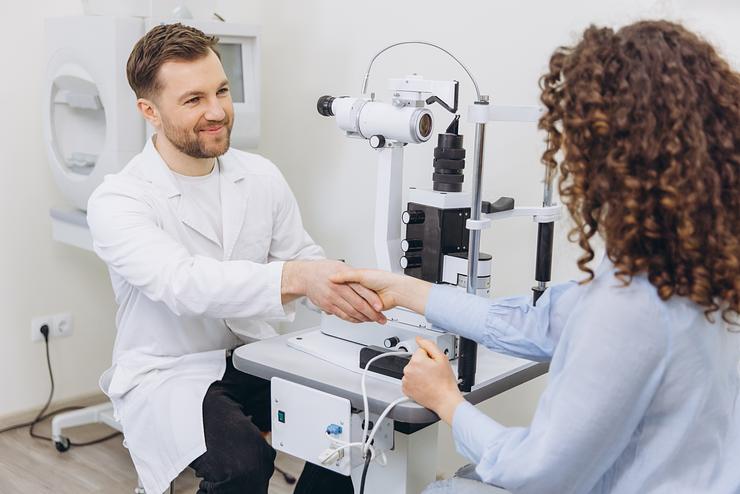
During an emergency eye exam, your optometrist starts with a quick symptom history, then checks your vision (visual acuity) and examines your eye under a slit-lamp microscope. They may add a fluorescein dye to reveal scratches, check your eye pressure if glaucoma is suspected, and dilate your pupils to view the retina. The goal is simple: diagnose the problem quickly, relieve pain, begin treatment, and refer you to a specialist when needed. Most urgent concerns are handled the same day, during business hours.
What to Remember
- A true eye emergency includes sudden vision loss, chemical splashes, eye injuries, severe pain, or new flashes and floaters with a shadow or curtain over your vision.
- Many FYidoctors clinics handle urgent eye concerns the same day during business hours, while severe or after-hours emergencies should go to a hospital emergency department.
- An emergency eye exam typically covers your history, vision and eye-pressure checks, a slit-lamp exam, dye staining, and often pupil dilation.
- Before your visit, flush chemical splashes with clean water for at least 15 minutes, avoid rubbing your eye, and never try to remove an embedded object.
- Coverage for medically necessary eye exams varies by province, so bring your provincial health card and confirm the details with your clinic.
What Counts As An Eye Emergency?
If you are wondering whether your symptoms are serious, here is a direct answer: seek urgent care for sudden vision loss, an eye injury, chemical exposure, severe eye pain, or new floaters and flashes accompanied by a shadow or curtain across your vision.
A few conditions deserve special attention. Retinal detachment often begins with a shower of new floaters, flashes of light, and a curtain or shadow that spreads from the side of your vision inward (StatPearls, Retinal Detachment). Acute angle-closure glaucoma brings sudden severe eye pain, blurred vision, coloured halos around lights, headache, and nausea or vomiting; the Canadian Association of Optometrists describes it as a medical emergency that can cause vision loss within a day.
Another condition, central retinal artery occlusion, is sometimes called an "eye stroke." It causes sudden, painless vision loss in one eye and is the ocular equivalent of a cerebral stroke, so it needs immediate emergency care and a stroke workup (Chen et al., Eye, 2024).
Not every red or irritated eye is an emergency. Mild redness, minor irritation, or a stuck contact lens are usually urgent-but-manageable concerns rather than trips to the emergency room. You can also review our guide to new floaters and flashes to understand when these symptoms signal something serious.
Optometrist Or Hospital ER: Where Should You Go?
Here is the quick decision. For most red eyes, infections, foreign objects, corneal scratches, and contact-lens problems, an optometrist can help you the same day. For chemical burns, penetrating trauma, sudden or complete vision loss, or a head injury, go straight to a hospital emergency department.
Why start with an optometrist? Optometrists carry the diagnostic tools, including a slit lamp, a tonometer, and retinal imaging, that general emergency departments often lack. Research supports this, too. An Ontario study found that fewer than 35% of eye-related emergency visits were emergent, and the authors noted that many non-urgent cases could be managed by an optometrist (BMC Ophthalmology, 2023).
At FYidoctors, many of our more than 300 clinics across Canada handle urgent eye concerns during business hours, so there is likely a location near you. For after-hours needs or severe emergencies, please go to the nearest emergency department. We would rather you reach the right care quickly than wait.
What To Expect During An Emergency Eye Exam
An emergency eye exam is a calm, step-by-step process, even when your symptoms feel frightening.
- 1. History and triage. You describe your symptoms, when they started, and whether an injury or chemical was involved. This guides everything that follows.
- 2. Visual acuity. Your vision is checked first, because it is considered one of the vital signs of the eye (StatPearls, Corneal Foreign Body).
- 3. Slit-lamp exam. A microscope with a bright light lets your optometrist examine the cornea, lens, and front of your eye in fine detail, much like a thorough slit-lamp exam during a routine visit.
- 4. Fluorescein dye. A harmless orange dye and a blue light reveal scratches on the surface of the eye, such as corneal abrasions. A surface foreign body can often be removed with numbing drops.
- 5. Eye-pressure check. When glaucoma is suspected, your optometrist measures the pressure inside your eye. This step is skipped if the eye may be ruptured.
- 6. Dilation and retinal exam. Drops widen your pupils so your optometrist can view the retina and optic nerve. Your vision stays blurry for several hours afterward.
- 7. Diagnosis, treatment, and referral. Treatment, whether drops or removing a foreign object, begins right away, and complex cases are referred to an ophthalmologist.
Throughout the visit, your optometrist explains each step, so you always know what is happening and why.
What To Do And Not Do Before Your Appointment
A few simple actions before you arrive can protect your vision. If you get a chemical in your eye, flush it with clean water for at least 15 minutes, and keep flushing caustic substances on your way to care (NIOSH/CDC).
Just as important is what to avoid. Do not rub the eye, and never try to remove an object that is embedded or deeply lodged; instead, cover it loosely and get help. If you can safely remove your contact lenses, do so, and bring the case with you.
Packing a few things ahead of time helps. Bring your provincial health card, a list of your medications, your current glasses or contacts, and sunglasses for the glare after dilation. If your eyes will be dilated, arrange for someone to drive you home.
After Your Exam: Follow-Up And Coverage In Canada
Once your exam wraps up, a little planning makes recovery smoother. Dilation blurs your vision for several hours, many conditions need a follow-up visit, and it is important to keep using any prescribed drops exactly as directed.
Coverage is a common worry, so let's be clear. For medically necessary eye emergencies, provincial health plans may cover part or all of the cost. In Ontario, OHIP covers exams for qualifying acute conditions such as acute retinal or corneal disease and glaucoma. In British Columbia, MSP covers medically required exams for eye disease, trauma, and injury.
Coverage rules vary elsewhere, and routine exams for working-age adults often are not covered, so confirm the details with your provincial health authority. Cost varies by clinic and province. As one trusted provider, FYidoctors can support your exam, follow-up, and any replacement eyewear in one place.
FAQ
What should I expect during an emergency eye exam appointment?
Is a scratched cornea an eye emergency?
Should I go to the ER or an optometrist for an eye problem?
How long does an emergency eye exam take?
What should I do if I get a chemical in my eye?
Are emergency eye exams covered by provincial health plans?
Can I drive myself home after an emergency eye exam?