

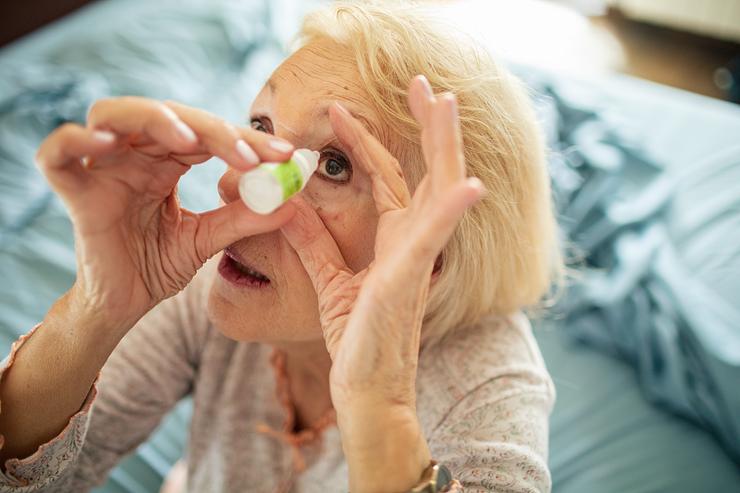
Dry eye happens when your tears can't keep the eye's surface stable, often from meibomian gland dysfunction and too much evaporation. Calgary's dry, low-humidity climate tends to make it worse. Treatment ranges from artificial tears and warm compresses to prescription drops, punctal plugs, and in-office IPL or RF therapy. A doctor-led dry eye assessment identifies the underlying cause so treatment fits you as a person. Cost varies by clinic.
What to Remember
- Dry eye is common in Canada — more than 21% of Canadian adults may be affected, most often women and people aged 55–64.
- Calgary's climate — the driest afternoon air of any major Canadian city — accelerates tear evaporation.
- Meibomian gland dysfunction is the leading cause of evaporative dry eye, the most common type.
- Treatment follows a ladder from at-home care to prescription drops and advanced in-office IPL/RF therapy.
- A doctor-led assessment pinpoints the cause so relief is personalized; cost varies by clinic.
What Is Dry Eye Disease?
Dry eye disease develops when your tear film becomes unstable and stops protecting the surface of your eye. As tears evaporate too quickly, the tear film grows saltier, which irritates the surface and triggers inflammation.
There are two main types. Evaporative dry eye is the most common, and it usually stems from meibomian gland dysfunction, when the tiny oil glands in your eyelids don't work properly. Aqueous-deficient dry eye means your eyes simply don't make enough tears.
You are far from alone. Worldwide, roughly 10 to 20% of adults over 40 live with moderate-to-severe dry eye, and more than 21% of Canadian adults — about six million people — may be affected.
Why Calgary's Climate Makes Dry Eye Worse
Calgary's air is simply thirstier than most. The city has the lowest annual afternoon humidity of any major Canadian city, sitting near 48%, while cities like Toronto and Vancouver stay far higher. Dry air pulls moisture straight off the surface of your eyes.
That matters more than it sounds. Research shows every 10% drop in relative humidity increases tear evaporation by 28 to 59%, so small shifts in the air around you can leave your eyes noticeably drier.
Calgary adds its own twists. Chinook winds bring rapid warm, dry swings, and long cold winters mean more indoor heating that dries the air inside. FYidoctors optometrists see these seasonal patterns play out across Calgary and Alberta clinics.
Common Causes and Risk Factors of Dry Eye
Dry eye rarely traces back to a single cause. Meibomian gland dysfunction leads the list for evaporative dry eye, and your risk tends to climb with age. During menopause, declining androgens can disrupt how the meibomian glands work, which makes dry eye more likely.
Modern habits play a role too. Every extra hour a day of screen time is linked to about 14% higher odds of dry eye, largely because you blink less and your tear film suffers. Contact lens wearers under 50 face roughly 2.4 times higher odds of developing it.
Other factors matter too. LASIK surgery causes significant loss of corneal nerves) that help regulate tears, and several medications — including antihistamines and antidepressants — are associated with dry eye.
Dry Eye Symptoms to Watch For
Dry eye announces itself in more ways than most people expect. Common signs include burning, stinging, a gritty or sandy feeling, redness, light sensitivity, blurred or fluctuating vision, and discomfort while wearing contact lenses.
Watery eyes can be a dry eye sign too, which surprises many patients. When the surface gets irritated, your eyes may flood with reflex tears that don't actually solve the underlying dryness.
Symptoms don't always match severity, either. Meibomian gland dysfunction can be present with few or no symptoms — up to two-thirds of people show signs without feeling much at all, which is one reason a professional assessment matters.
How Dry Eye Is Diagnosed
A proper diagnosis starts with a conversation. Your optometrist begins with a symptom questionnaire, then moves to targeted tests: measuring how quickly your tear film breaks up, checking tear osmolarity, and staining the ocular surface to spot damage. Meibography images the oil glands themselves.
These tests identify the type of dry eye you have — evaporative or aqueous-deficient — and that distinction is essential, because treatment differs for each. Guessing wastes time.
This is also why over-the-counter drops alone often fall short. Without knowing the cause, you may soothe symptoms while the real driver goes untreated. FYidoctors offers doctor-led, technology-supported assessments built to find that root cause.
Dry Eye Treatment Options in Calgary: From Drops to Advanced Therapy
Effective care follows a ladder, and most patients start at the bottom. First-line steps include preservative-free artificial tears, warm compresses, lid hygiene, and practical changes to your screen habits and environment. Many people find real relief here.
When inflammation drives the problem, your optometrist may add prescription anti-inflammatory drops such as cyclosporine or lifitegrast. Punctal plugs are another option, gently conserving the tears you already produce by slowing how quickly they drain away.
For moderate-to-severe dry eye tied to meibomian gland dysfunction, advanced in-office therapy can help. Intense pulsed light (IPL) has moderate-certainty evidence from randomized trials, showing about a 16-point improvement on the OSDI symptom score. Radiofrequency (RF) therapy shows promising real-world results, though its evidence base is still growing. Neither one cures dry eye, and both suit evaporative or MGD-related dry eye rather than every case.
Treatment is staged and personalized, so your plan reflects your eyes and your lifestyle. Advanced therapy availability and cost vary by clinic.
When to See an Optometrist for Dry Eye in Calgary
Book an assessment if your symptoms persist despite drops, keep getting worse, affect your vision, or interfere with daily life. Dry eye is easier to manage before it becomes disruptive.
FYidoctors provides doctor-led assessments, personalized treatment plans, and ongoing management across multiple Calgary and Alberta locations. You can also access comprehensive eye exams, contact lens fittings, and support for related conditions.
Book an appointment for an eye exam or find a location near you.
FAQ
Why are my eyes so dry in Calgary?
Can dry eye be cured?
Why do my eyes water if they're dry?
Does IPL treatment work for dry eye?
Can I wear contact lenses if I have dry eye?
How much does dry eye treatment cost in Calgary?