

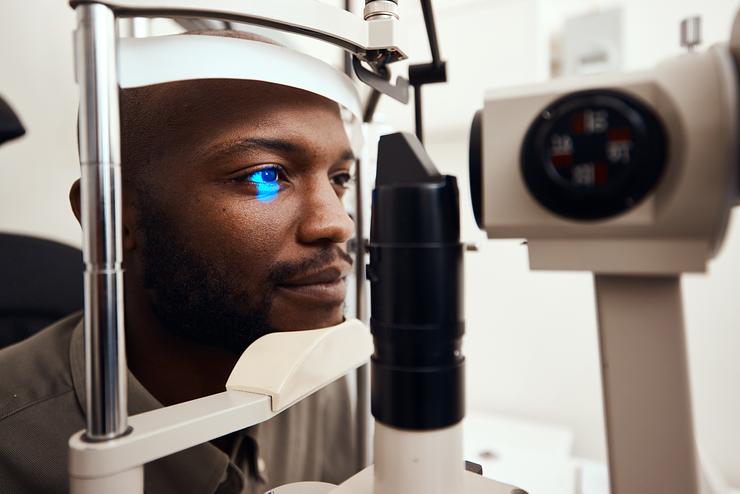
If you book an "eye test" expecting a full checkup, the result may surprise you. Many Canadians use the two terms to mean the very same thing. So, eye test vs. eye exam: what's the difference in Canada? They are different services, and picking the right one protects both your family's vision and your budget.
Eye Test vs. Eye Exam: The Short Answer
Eye test vs. eye exam: what's the difference in Canada? An eye test (also called a sight test or vision screening) usually just checks how well you see or estimates a glasses prescription. An eye exam is a comprehensive, doctor-led check of both your vision and your eye health.
The national professional body draws the same line. As the Canadian Association of Optometrists puts it, a sight test is not a comprehensive eye exam that is conducted by your optometrist. In Canada, the two terms often get used interchangeably. That does not make them the same service.
- Key point: An eye test tells you how well you see. An eye exam also tells you how healthy your eyes are.
What Is an Eye Test (or Vision Screening)?
An eye test, sight test, or vision screening is a quick check of how clearly you see. These checks are often automated or run by non-doctor staff at a school, pharmacy, or optical counter. Some estimate your refraction, which is how your eye bends light to focus an image.
Here is the catch. A screening cannot diagnose eye disease, because no doctor examines the health of your eyes. Screenings still have their place: they can flag that something looks off and nudge you to book a real exam, but they cannot confirm what is wrong or rule out a hidden problem.
Some clinics offer a detailed eye pre-test that screens colour vision, depth perception, eye pressure, and side vision before your doctor steps in. Helpful as that is, it prepares for the exam rather than replacing it. A screening also includes the familiar eye test chart on the wall.
The Eye Test Chart Explained
The eye test chart you read from across the room is the Snellen eye chart. Invented in 1862 by a Dutch ophthalmologist named Herman Snellen, the Snellen chart remains the most widespread technique in clinical practice for measuring visual acuity. Visual acuity means the sharpness of your vision.
A "20/20" result means normal, average distance vision. It does not mean perfect vision.
- Key point: The chart measures visual acuity only. A chart reading is not a prescription and not a health check.
What Is a Comprehensive Eye Exam?
A comprehensive eye exam is performed by an optometrist, a doctor trained to examine, diagnose, and treat the eyes. The visit covers far more than reading letters on a chart. Your optometrist checks how your eyes work together and looks closely at the health of each eye.
A full exam usually includes these steps:
- Case history: a review of your health, medications, and vision concerns.
- Visual acuity: the chart test for sharpness of vision.
- Refraction: the measurement that fine-tunes your prescription.
- Binocular vision: a check of how well your eyes team up and focus.
- Eye health: an inside-and-out look at the structures of each eye.
This depth matters. A comprehensive exam can catch glaucoma, cataracts, age-related macular degeneration (AMD), and diabetic retinopathy. As FYidoctors' guide on what to expect from an eye exam explains, an exam can even reveal early signs of diabetes or high blood pressure.
Not sure who actually performs a real exam? Learn the difference between an optometrist, optician and ophthalmologist before you book.
Eye Test vs. Eye Exam: Side-by-Side
Here is a simple comparison of the two services.
- What it measures: Eye test/vision screening = how clearly you see; an estimated prescription. Comprehensive eye exam = your vision plus the health of your eyes.
- Who does it: Eye test/vision screening = often automated or non-doctor staff. Comprehensive eye exam = a licensed optometrist.
- Detects eye disease? Eye test/vision screening = no. Comprehensive eye exam = yes.
- Prescription you can trust? Eye test/vision screening = an estimate only. Comprehensive eye exam = yes, doctor-verified.
- Typical setting: Eye test/vision screening = school, pharmacy, or optical counter. Comprehensive eye exam = an eye care clinic.
Cost and Coverage in Canada
How much does an eye test cost in Canada? There is no single answer, because the cost varies depending on where you live and what you book. The province you live in matters, along with whether you have provincial or workplace coverage. The clinic you choose and the type of visit, whether a basic screening or a comprehensive exam, also change the total.
Specialized tests can add to the cost too. One common add-on is OCT retinal imaging, or optical coherence tomography, a detailed scan of the retina. Ask whether that scan is recommended for you before you add it on. Ask the clinic for a full price list when you book, so there are no surprises at checkout.
- Key point: A very low advertised price often signals a quick screening, not a doctor-led exam. Compare what each service actually includes.
Is an eye exam covered in Canada? Coverage rules are set by each province, not by the clinic. FYidoctors' guide to eye care coverage across Canada breaks down where you stand. Children and seniors are commonly covered, while many working-age adults (roughly ages 19 or 20 to 64) pay out of pocket unless an exam is medically necessary.
Examples: In Ontario, OHIP coverage does not cover routine eye exams for adults aged 20-64 without an eligible medical condition. In British Columbia, routine eye examinations are not an MSP benefit for individuals aged 19 to 64 years (BC MSP). Alberta covers one routine eye exam per benefit year for children 18 and under and seniors 65+, but not routine exams for ages 19 to 64 (AHCIP). Quebec's RAMQ generally covers exams for residents under 18 and those 65 and older.
How Long It Takes and How Often to Go
Wondering how long it takes for an eye test? A complete eye exam for an adult or senior usually takes between 30 and 60 minutes. Plan for extra time if you need dilating drops, which widen your pupils, or additional imaging. A quick sight test or screening is much shorter, but far less thorough.
How often should you get an eye exam? Timing depends on age and risk. The Canadian Association of Optometrists (CAO) lists its recommended eye exam frequency. Babies (6 to 9 months) should book the first exam, and kids (6 to 19 years) should book an exam every year.
The adult schedule is easy to follow: Adults 20 to 39 should have an exam every 2 to 3 years; adults 40 to 64 should go every 2 years; adults 65 and older every year. People with diabetes or a family history of glaucoma may need more frequent visits, and your optometrist can set the right schedule.
Regular visits pay off. Health Canada notes that with early detection, up to 75% of vision loss can be prevented or treated. Routine exams help catch problems early, while treatment is still simple.
Finding an Eye Test Near You
Searching for an eye test near me usually means you want a thorough, trustworthy checkup close to home. When you look up an eye examination test near me, aim for a full, doctor-led exam rather than a quick screening.
FYidoctors is Canada's largest, doctor-led eye care provider, with more than 650 optometrists and over 300 locations across the country. You can complete your exam and choose your eyewear at one clinic, and your lenses are assembled right here in Canada. You can search by city or postal code to find the closest clinic to you.
Bring your current glasses, a list of your medications, and your health card so your optometrist has the full picture. Book an appointment for an eye exam or find a location near you.
FAQ
Is an Eye Test the Same as an Eye Exam?
How Much Does an Eye Test Cost in Canada?
How Long Does an Eye Test Take?
What Is an Eye Test Chart?
How Often Should I Get an Eye Exam?
Is an Eye Exam Covered by My Province?