

What Are Anti-Fatigue Lenses? A Canadian Guide To Relieving Digital Eye Strain
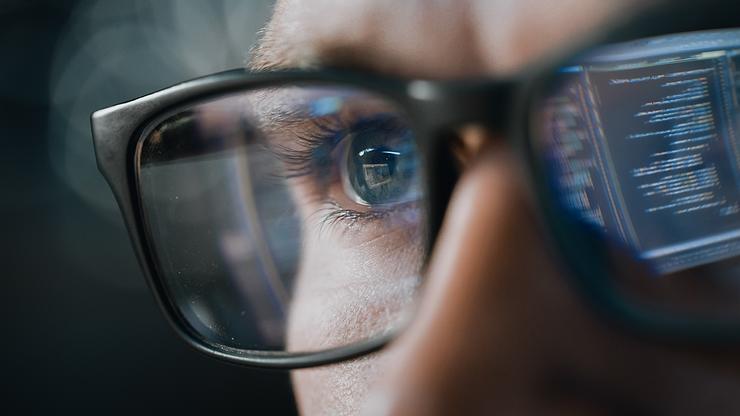
Anti-fatigue lenses are enhanced single-vision glasses with a small extra focusing boost built into the bottom of the lens. That boost eases the effort your eyes make to focus up close, which helps relieve the tired eyes, headaches, and blurred vision linked to long hours on screens. They differ from blue-light lenses, which add only a coating, and from progressive lenses, which correct several distances at once. Anti-fatigue lenses suit adults roughly 18 to 45 who spend hours on digital devices but don't yet need progressives.
The Essentials
- Anti-fatigue lenses are single-vision lenses with a mild lower "add" (typically under +1.00 D) that reduces focusing effort during screen and near work.
- They target the main causes of screen strain, sustained focusing and reduced blinking, rather than blue light.
- They differ from blue-light coatings, which the evidence suggests don't relieve strain, and from progressive lenses.
- Screen-heavy adults around 18 to 45 who don't yet need progressives are the best fit, and an eye exam confirms it.
- FYidoctors offers doctor-recommended, Canadian-assembled anti-fatigue options such as Kinetic lenses.
What Are Anti-Fatigue Lenses?
Think of an anti-fatigue lens as a single-vision lens with a little help built in. Across most of the lens you get your normal distance or intermediate prescription. Toward the bottom, where you look for reading and screens, a small near boost quietly kicks in.
You may also hear these called "enhanced single-vision" or "accommodative-relief" lenses. The boost is subtle, typically under +1.00 D, so your vision still feels natural. It shouldn't feel like slipping on a pair of readers or bifocals.
Studies of digital eye strain in adults aged 20 to 40 have tested low adds such as +0.50, +0.75, and +1.25 D, and anti-fatigue designs usually sit under +1.00 D.
We see these lenses as a comfort-first option for near and screen work, not a treatment for eye disease. At FYidoctors, our single-vision and specialty lenses are built on HOYA lens technology, so they can be customized to how you actually use your eyes.
How Anti-Fatigue Lenses Relieve Eye Strain
Here's what's happening behind those tired eyes. When you focus up close, a small muscle inside each eye contracts to sharpen the image. Hold that focus on a screen for hours and the muscle never really gets to rest, so it fatigues.
Screens make it worse in a second way. You blink less and less completely when you're locked onto a display. In one pilot study, incomplete blinks rose from a median of 6 to 15 per minute after 60 minutes of screen use, which dries the eye surface and adds to the discomfort.
Reduced accommodative facility has also been measured after just 60 minutes of smartphone use in young adults with otherwise healthy vision.
The small lower add in an anti-fatigue lens gives that focusing muscle a break. By relaxing accommodation during near work, the lens reduces focusing fatigue, so you're more likely to reach the end of the day without the familiar tired eyes, headaches, and blurred vision.
One caution worth naming: strain sometimes comes from an uncorrected or outdated prescription rather than focusing effort alone. An optometrist can tell the difference.
Who Should Consider Anti-Fatigue Lenses?
If your day revolves around screens, you're likely the person these lenses were designed for. Office and remote workers, students, and anyone who bounces between a phone, laptop, and monitor tend to benefit most, especially adults roughly 18 to 45 who aren't in progressives yet.
Early or pre-presbyopes fit here too. Many people in their late 30s and 40s start noticing that near vision takes a bit more effort, and a gentle boost can smooth that transition. The symptom profile is easy to recognize: tired eyes, headaches, blurred or watery vision, and trouble concentrating after a screen-heavy stretch.
The problem is widespread. Reported prevalence of digital eye strain ranges from 42% to 95%, and adults aged 18 to 79 mostly spend two to six hours a day on screens. In Canada, only 57% of adults met the recommended limit of no more than three hours of recreational screen time in 2022 to 2024.
A few situations call for professional guidance first, such as a large difference between your two eyes or a binocular-vision concern. A comprehensive exam sorts that out, whether you're solving this for yourself or a screen-heavy family member.
Anti-Fatigue Lenses Vs. Blue-Light And Progressive Lenses
This is where a lot of confusion lives, so let's be straight with you. Blue-light filtering is a coating, not a lens type, and it can be added to almost any lens. It's also not the strain-buster it's often marketed as.
A 2023 Cochrane systematic review found that blue-light filtering lenses probably make no difference to eye strain, eye health, or sleep.
Anti-fatigue lenses take a different route. Rather than tinting light, their optical design reduces the focusing effort that drives much of the discomfort, and focusing effort is a genuine cause of screen strain.
Progressives are a different tool again. They correct several distances through a stronger, graduated add that can run up to +3.50 D or more, which is why they take some getting used to. Anti-fatigue lenses use one small near boost, so most people adapt quickly.
Want the best of both worlds? You can pair anti-fatigue lenses with anti-reflective or blue-light coatings if you prefer. Our goal is to recommend what fits your eyes, not to push a single product.
How To Reduce Digital Eye Strain Beyond Lenses
Lenses are one helpful lever, but your daily habits matter just as much. A few small changes go a long way toward comfortable screen time.
- Follow the 20-20-20 rule: every 20 minutes, look about 6 metres (20 feet) away for 20 seconds to let your focusing muscle relax.
- Blink consciously, and reach for artificial tears when your eyes feel dry.
- Set your screen about 50 to 70 cm away and slightly below eye level, then cut glare and improve the lighting around you.
Above all, book a comprehensive eye exam. Strain is often a sign of an uncorrected or outdated prescription, and correcting it can resolve symptoms on its own. Pairing the right lenses with good habits and a current prescription is the most reliable path to relief.
Anti-Fatigue Lenses At FYidoctors
When you're ready to explore your options, we've got you covered. FYidoctors offers doctor-recommended specialty lenses built on HOYA technology, including Kinetic lenses that are designed for indoor and screen use to help reduce eye strain and fatigue.
We also carry iD Space, Screen, and Zoom office lenses, plus optional anti-reflective and blue-light coatings if you'd like to add them.
Proudly Canadian, we assemble our glasses and lenses locally, backed by more than 650 optometrists across over 300 locations. Cost varies by clinic, lens choice, and prescription, and your optometrist will recommend the right option for how you live and work.
Book an appointment for an eye exam or find a location near you.
FAQ
What are anti-fatigue lenses?
Do anti-fatigue lenses actually work?
Anti-fatigue lenses vs. blue light — what's the difference?
Who should wear anti-fatigue lenses?
Are anti-fatigue lenses the same as progressive lenses?
How much do anti-fatigue lenses cost?
Can I add a blue-light or anti-reflective coating to anti-fatigue lenses?