

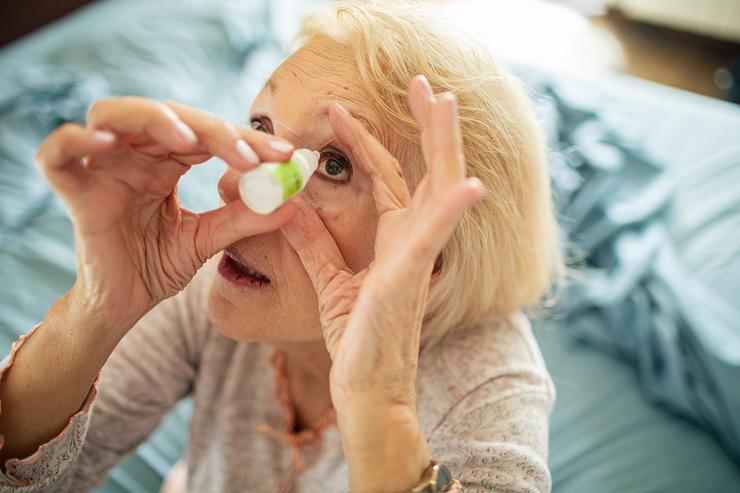
HYLO eye drops are preservative-free, phosphate-free lubricating drops that use sodium hyaluronate to relieve dry, gritty, tired, or irritated eyes. The HYLO family covers a range of needs, from occasional dryness to chronic dry eye and dry eye with allergy symptoms.
Each drop comes from a German-engineered airless bottle that dispenses one sterile drop at a time and stays sterile for six months after opening. HYLO eye drops are available across Canada without a prescription, and they are compatible with contact lenses.
What to Remember
- HYLO eye drops use sodium hyaluronate, a lubricant that has been studied for dry eye relief.
- Different HYLO variants suit different levels of dryness, so matching the right one matters.
- Being preservative-free and phosphate-free makes HYLO well suited to frequent use and sensitive eyes.
- HYLO is contact-lens compatible and is often recommended after eye surgery.
- Persistent dry eye deserves a professional assessment, because drops relieve symptoms rather than treat the cause.
What Are HYLO Eye Drops and How Do They Work?
HYLO eye drops are preservative-free, phosphate-free artificial tears. Their active ingredient is sodium hyaluronate at 1 mg/mL (0.1%), a lubricant that occurs naturally in the eye and holds water against its surface.
When you blink, that moisture spreads into a smooth, stable film across the eye. Sodium hyaluronate supports this film, easing the dry, gritty feeling and helping tired eyes stay comfortable for longer.
The evidence here is encouraging at the ingredient level. In a 2017 randomized controlled trial, 0.1% sodium hyaluronate improved dry eye signs and symptoms over 12 weeks, performing on par with prescription cyclosporine. That study looked at the ingredient, not HYLO by name.
One honest point up front: lubricating drops relieve symptoms. They do not cure dry eye. Think of HYLO as dependable first-line care while you and your optometrist look at the bigger picture.
Which HYLO Eye Drop Is Right for Your Dry Eye?
The right HYLO depends on how often your eyes feel dry and how severe the dryness is.
- Occasional or mild dryness: HYLO / HYLO mini. Everyday lubrication; the mini is a smaller starter size, while the standard bottle suits regular daily use.
- Chronic or more severe dryness: HYLO GEL. Higher viscosity for longer-lasting relief, so you reach for it less often.
- Dry eye with allergy or inflammation: HYLO DUAL / HYLO DUAL INTENSE. Adds ectoine alongside sodium hyaluronate; DUAL INTENSE is intended for chronic dry eye with inflammatory symptoms.
Ectoine is a natural molecule that helps protect and hydrate the ocular surface. In a 2021 double-blind trial, 2% ectoine drops significantly reduced itchy and watery eyes versus placebo in people with seasonal allergies (Salapatek et al.). As with sodium hyaluronate, that evidence sits at the ingredient level, not with the combined HYLO DUAL product.
Not sure which one fits? A quick conversation settles it. FYidoctors carries the full HYLO family and can match the right drop to your symptoms.
Why Preservative-Free and Phosphate-Free Matters
Preservatives keep multi-use bottles free of bacteria, but with frequent or chronic use they can irritate the surface you are trying to soothe.
Benzalkonium chloride (BAK) is a common eye-drop preservative. Research shows that, with frequent or chronic use, BAK can be toxic to the cells of the cornea and conjunctiva (Goldstein et al., 2021). Because of this, clinical guidance now favours preservative-free formulas whenever possible (Duarte and Alves, 2024).
Mayo Clinic offers a practical rule: if you use lubricating drops more than four times a day, choose preservative-free (2025). HYLO fits that need, and its phosphate-free formula avoids a separate concern about deposits forming on the eye's surface.
Who benefits most? Frequent users, people with sensitive eyes, contact-lens wearers, and anyone recovering from eye surgery.
How to Use HYLO Eye Drops
A typical routine is one drop in each eye two to three times a day, or as directed by your eye-care provider. You can use HYLO more often if you need to, thanks to its preservative-free formula.
The bottle is designed to make this simple. Prime it with a few pumps before the first use, then press for one calibrated, sterile drop at a time. Depending on the size, a bottle delivers 150 or 300 doses and stays sterile for six months after opening (per the manufacturer, CandorVision).
Store it according to the label, and note the date you open it. A little blurriness right after a drop is normal and clears quickly. If you are pregnant, breastfeeding, or considering HYLO for a child, consult your eye-care provider first.
Using HYLO With Contact Lenses and After Eye Surgery
HYLO is compatible with contact lenses and is a common choice after eye surgery.
You can use HYLO with soft and hard lenses in place, according to the manufacturer. That matters, because independent research supports preservative-free, BAK-free drops for lens wearers, who are especially sensitive to preservatives (Pucker, 2020).
After eye surgery, eye-care providers often recommend preservative-free drops to keep the healing surface comfortable. One 2025 study found preservative-free lubrication reduced early corneal staining in higher-risk patients after cataract surgery (Palkovits et al.). Its main three-month endpoint was not significant, and the product tested was not HYLO. Always follow the specific instructions from your surgeon or optometrist.
When Eye Drops Aren't Enough: Talk to Your Optometrist
If your symptoms keep coming back, drops alone may not be the full answer.
According to the National Eye Institute, dry eye happens when your eyes don't make enough tears to stay wet, or when your tears don't work correctly. About 21% of Canadian adults screen positive for it, based on a population-based survey using 2016–2017 Ontario data (Caffery et al., 2019).
Everyday triggers add up. Concentrated screen use reduces how often you blink, which lets the tear film dry out; aging changes tear production; and dry Canadian winters with indoor heating pull moisture from the eye.
Care follows a ladder. Artificial tears and lid hygiene come first, then prescription options such as cyclosporine or lifitegrast, and procedures like punctal plugs if needed. Book an eye exam if you have ongoing irritation, blurred vision, redness, or pain. An optometrist can find the cause, not just quiet the symptoms.
Where to Buy HYLO Eye Drops in Canada
You can buy HYLO across Canada without a prescription. Look for it behind the pharmacy counter and at optometry and optical clinics. If your local store does not stock it, a pharmacist or optometrist can usually order it in.
Cost varies by clinic and retailer, and your FYidoctors optometrist can advise on the right HYLO for you.
FAQ
Are HYLO eye drops safe?
Can HYLO eye drops be used during pregnancy or breastfeeding?
How is HYLO different from other preservative-free drops?
What are the side effects of HYLO eye drops?
Does HYLO expire after opening?
Can children use HYLO eye drops?
Will HYLO cure my dry eye?